Patient data offers certainty
PIK3CA is not HER2, and the presence of the mutation is necessary but insufficient for spectacular success. Patient data could inform the clinical strategy.
Novartis paid $2B+ in early 2026 for a mutant-selective PI3Kα inhibitor. Patient data shows PIK3CA, unlike HER2, is not a solo driver: amplifications driven by a nearby gene, hyperactivated substrate enzymes and co-occurring PI3K or MAPK mutations are likely to reduce response. Pairing biomarker selection with combinations increases the probability of success.
PIK3CA case study · by Pawel Zawadzki, PhD
PIK3CA-mutated tumors are a high unmet need. There is enough signal in clinical trials from competing products to warrant FDA approval. What's not to like?
PIK3CA is part of the same pathway as HER2, and trastuzumab is one of the most successful oncology drugs of all time. So the expectation is that the mutant-selective PI3Kα inhibitor also will be, but will it?
Patient data uncovered that PIK3CA, in contrast to HER2 is not a solo driver. Here are the complications:
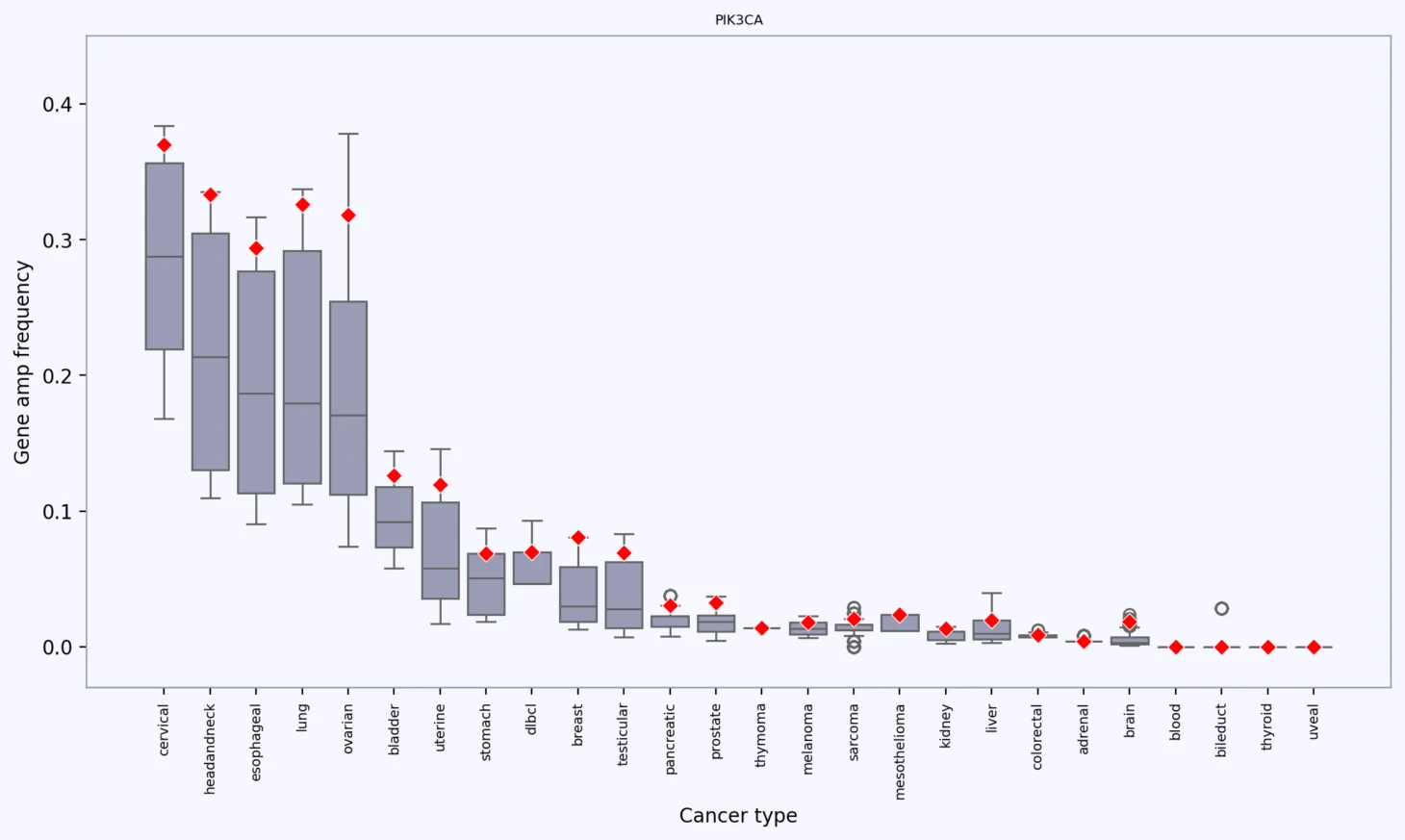
PIK3CA is not HER2, and the presence of the mutation is necessary but insufficient for spectacular success. Patient data could inform the clinical strategy.
Yes, biomarkers narrow the addressable population, but pairing biomarker selection with combination therapy exploration increases the probability of success and can recover the lost market size.
Ask the patient data why, and the path for PIK3CAi clinical and commercial success will emerge.
Multiple mechanisms reducing the ORR were identified in patient data. Compare the effects of each and build a winning clinical strategy.
There's a common misconception that clinical trials are required to assess response rates. Treatment-naive patient data can actually identify factors that limit clinical response before any patients are dosed.
Medicines intended to work in patients should be developed with patient data in mind.