Drug targets validated by patient tumors
CRISPR screens changed oncology target discovery. They run in cell lines, whose relevance to the patient is unknown until the clinic. We run the same question through 13,607 real tumors.
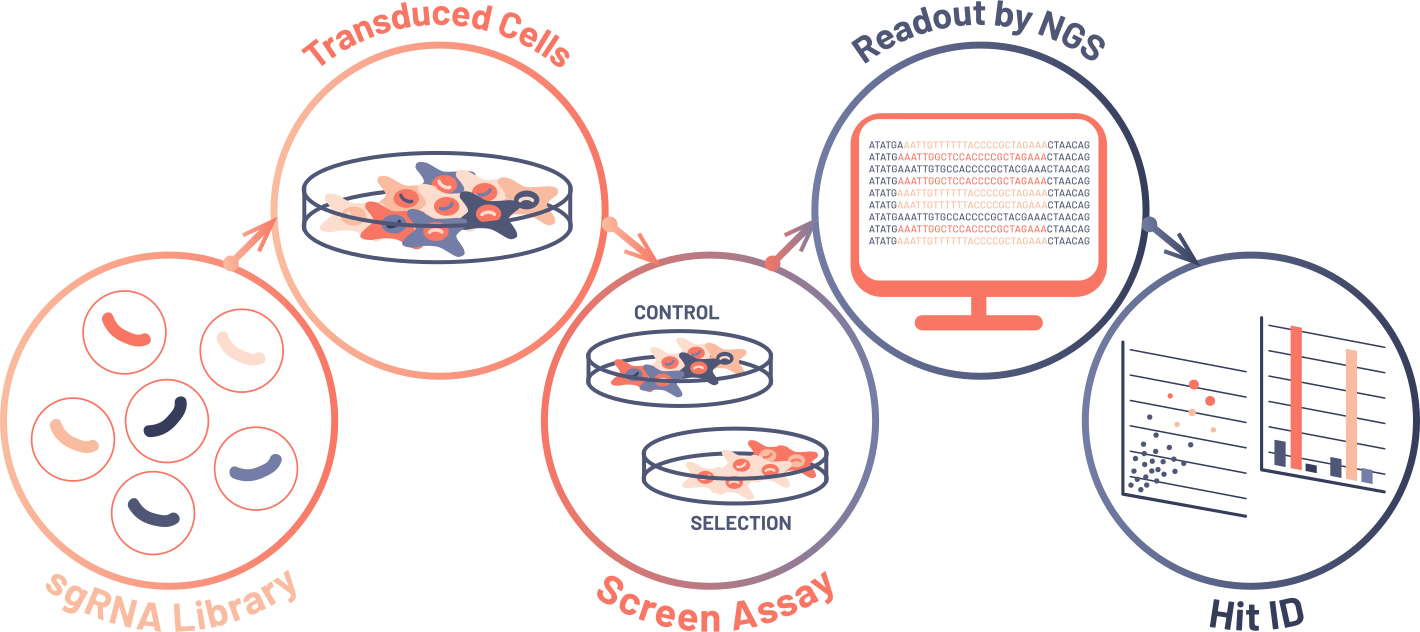
Evolution is a screen nature already ran
A tumor is a population under selection. Genes it cannot afford to lose stay intact; gene pairs it cannot lose together stay intact together. Across thousands of tumors, those patterns are measurable.
“We can't ethically conduct these experiments [screens] in people, but in a way, life has performed these experiments for us.”Jennifer Doudna
Synthetic lethality, from the patient side
As mutations accumulate, other genes become essential for the tumor's survival. We map those dependencies across thousands of patient tumors, for every tumor type and genetic background.
A model for identifying drug targets from patient data
Cancer evolution is a screen that nature has already run in every patient. In our “Mother Nature's” analysis, clinically successful targets such as MEK1, PARP and PD-L1 show different-than-expected levels of deleterious mutations, but only in the tissues where their inhibitors produce clinical responses. Our model is built to detect that signal for any gene, in any tissue.
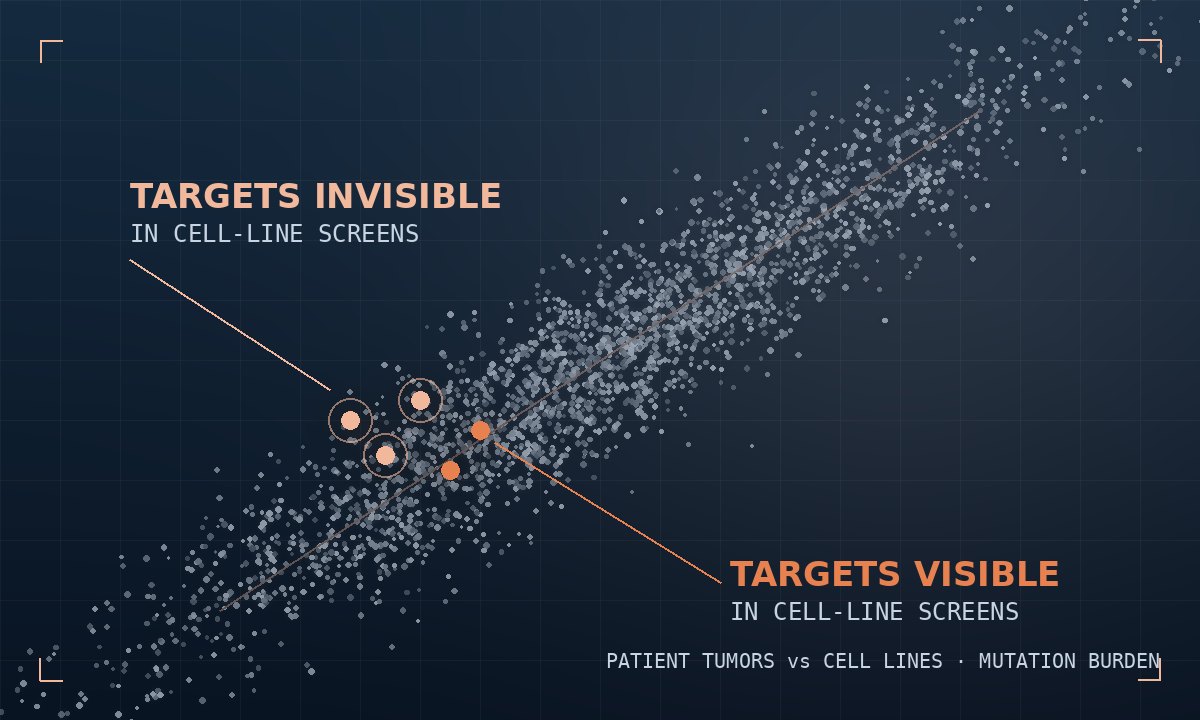
From 13,607 patient tumors to drug targets that are invisible in cell-line screens.
- Dependency maps built from patient biopsies, not cell lines
- Genomic, transcriptomic and clinical data integrated per tissue
- Co-dependencies ranked for genetically defined populations
- Every target ranked with evidence, cohort definition and translational-risk notes
What the model actually reads
For every gene and every tissue we compare the observed burden of deleterious mutations with what tumor evolution would predict if the gene did not matter. A gene a tumor cannot afford to lose is conserved; a gene whose loss helps the tumor is not. The difference, measured per tissue, is the dependency signal.
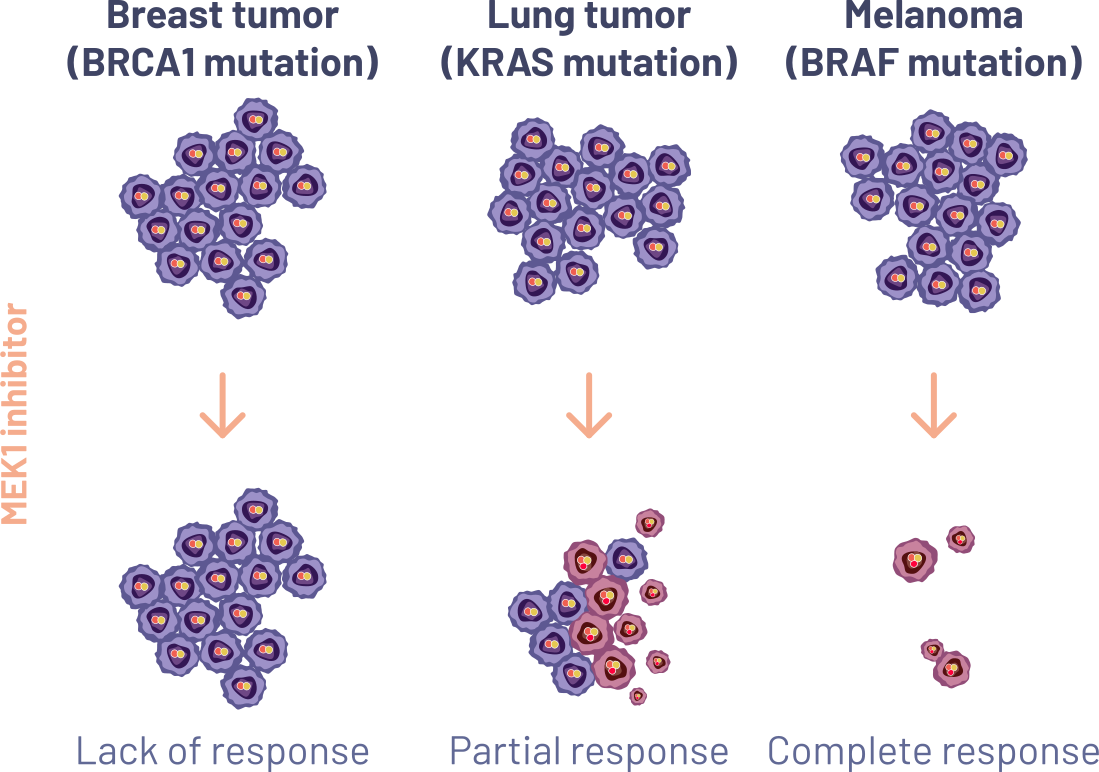
- Per-tissue readout: the same gene can be a dependency in one indication and irrelevant in another
- Co-dependencies: pairs of genes that are conserved together, the basis for bispecific and combination targets
- Patient-population definition comes out of the same analysis, so the cohort is known before the program starts
- Retrospectively validated against clinical outcomes; methodology and cohorts available under NDA
Two full sample reports are public on the asset evaluation page.
What a dish needs vs. what a tumor needed
Cell-line screens, DepMap standard
- Dependencies of immortalized lines grown in plastic
- No tumor microenvironment, no immune pressure, no treatment history
- Translation to the clinic is unknown until Phase II
Patient-derived dependency maps Gordion
- Dependencies selected inside real tumors, under real therapy
- Co-dependencies ranked per genetically defined population
- Targets that cell-line assays cannot see; validated by partnering deals
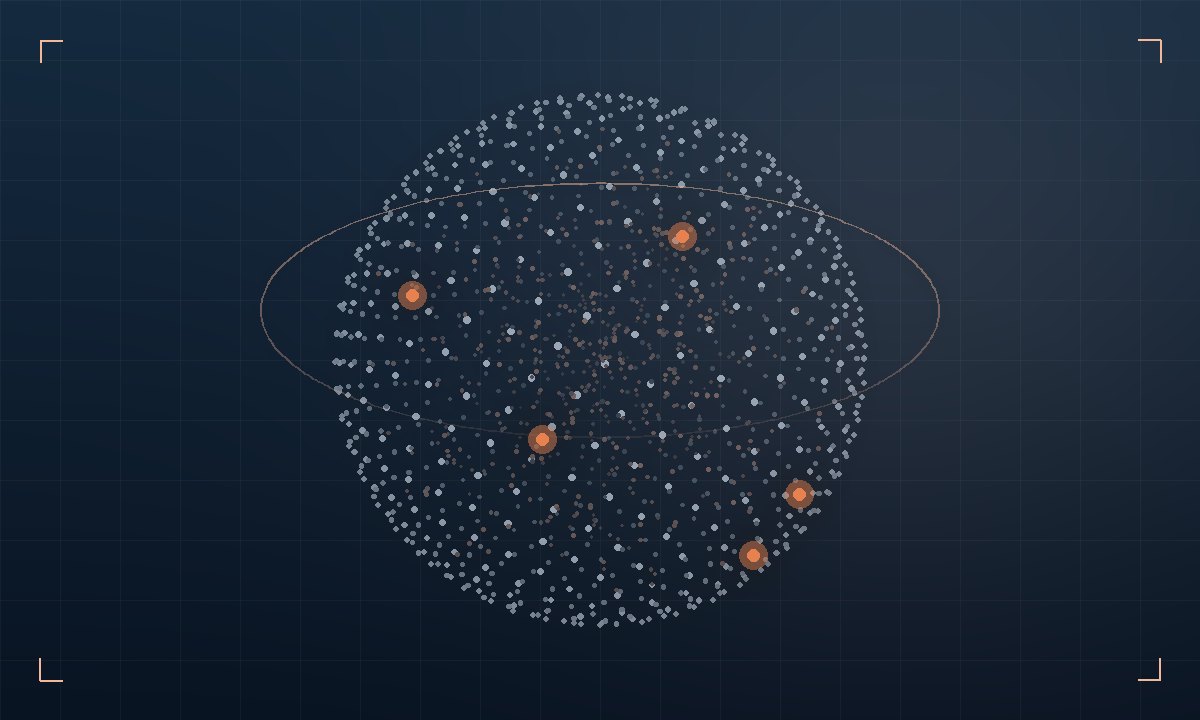
Patient tumor data
Genomic, transcriptomic and clinical data from biopsies across 26 tissue types.

Dependency map
Pattern recognition quantifies target essentiality in each genetically defined population.

Co-dependency pair
We rank pairs where blocking a target together with its compensatory mechanism is synergistic.

Bispecific program
A bispecific antibody or combination, with the patient population defined up front.
Targets your cell-line assays cannot see
We identify novel targets and target pairs across any indication. A typical engagement:
Scoping
Indication, modality, constraints. One call.
Mapping
Dependency and co-dependency analysis in the matching patient populations.
Ranked list
Targets and pairs with evidence, cohort definition and translational-risk notes.
Program
Options: license, co-develop, or take the list in-house.