Cancer biology is complex
When you observe a drug target being overexpressed, do not jump to the conclusion that its inhibition will translate into clinical efficacy. Gleevec, Herceptin and Tagrisso succeed because they inhibit solo drivers.
Amgen paid $1.9B+ for an FGFR2 asset in gastric cancer, and later trials did not recapitulate the early efficacy signal. Patient data shows FGFR2 is not a solo driver but part of a “team”, so inhibiting it alone is necessary but insufficient. Ask whether your target is a solo driver before the trial.
FGFR2 case study · by Pawel Zawadzki, PhD
Gastric cancer is a high unmet need. And FGFR2 showed strong preclinical data supported by an early clinical signal. What was there not to like?
Later phases of clinical development did not recapitulate the early efficacy signal. So what went wrong?
Patient data uncovered that FGFR2 is not a solo driver; instead, it is part of a “team” driving gastric cancer.
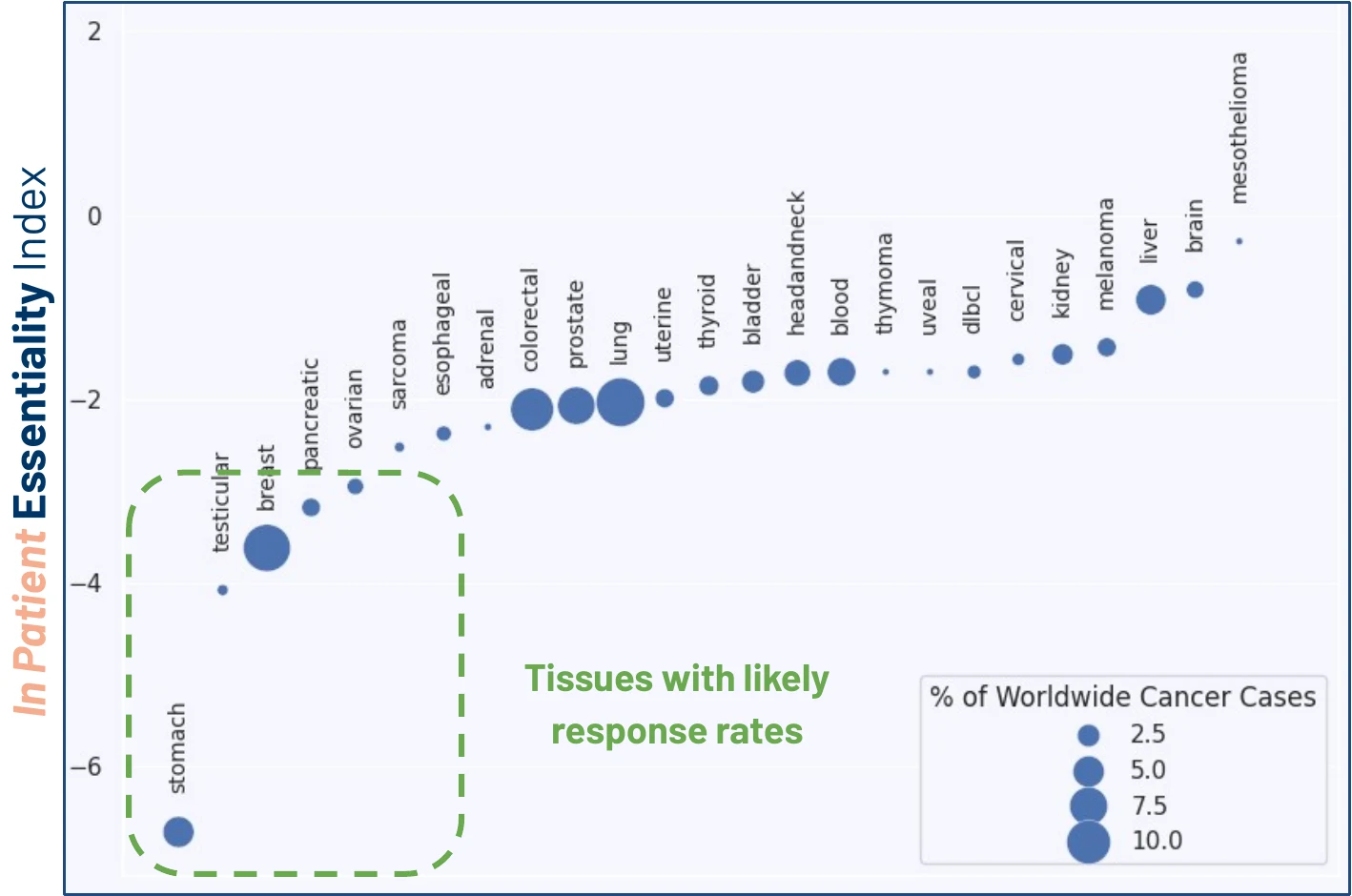
When you observe a drug target being overexpressed, do not jump to the conclusion that its inhibition will translate into clinical efficacy. Gleevec, Herceptin and Tagrisso succeed because they inhibit solo drivers.
Data from patients can reveal the complexity of tumor biology. Ask a good question: is my target a solo driver or part of a “team” and you will save years of clinical development and avoid painful surprises like FGFR2.
The models are important, but remember, they are constructed to test a single dependency, not to assess the complexity of real tumors.
Use patient data to determine whether your target is an independent driver or is supported by another player.
There's a common misconception that clinical trials are required to assess response rates. Treatment-naive patient data can actually identify factors that limit clinical response before any patients are dosed.
Medicines intended to work in patients should be developed with patient data in mind.