Mutation vs amplification
Patient data confirms the extreme addiction of tumors to EGFR. But mutation ≠ amplification, explaining the underperformance of monoclonal antibodies and suggesting that BiAb might have a massive impact in the space.
Tagrisso has generated $40B+ in the EGFR-mutation market. Patient data shows 5× more patients with amplified EGFR than with activating mutations, but amplified EGFR is a team player, which is why EGFR antibodies underperformed. Bispecific antibodies can address this market; the question is which product will win it.
EGFR case study · by Pawel Zawadzki, PhD
EGFR is one of the most powerful oncogenes, and it represents a beautiful success story of precision oncology.
Is a new gold rush about to start in the EGFR space?
Patient data shows the EGFR market could be massively expanded.
EGFR is a great drug target.
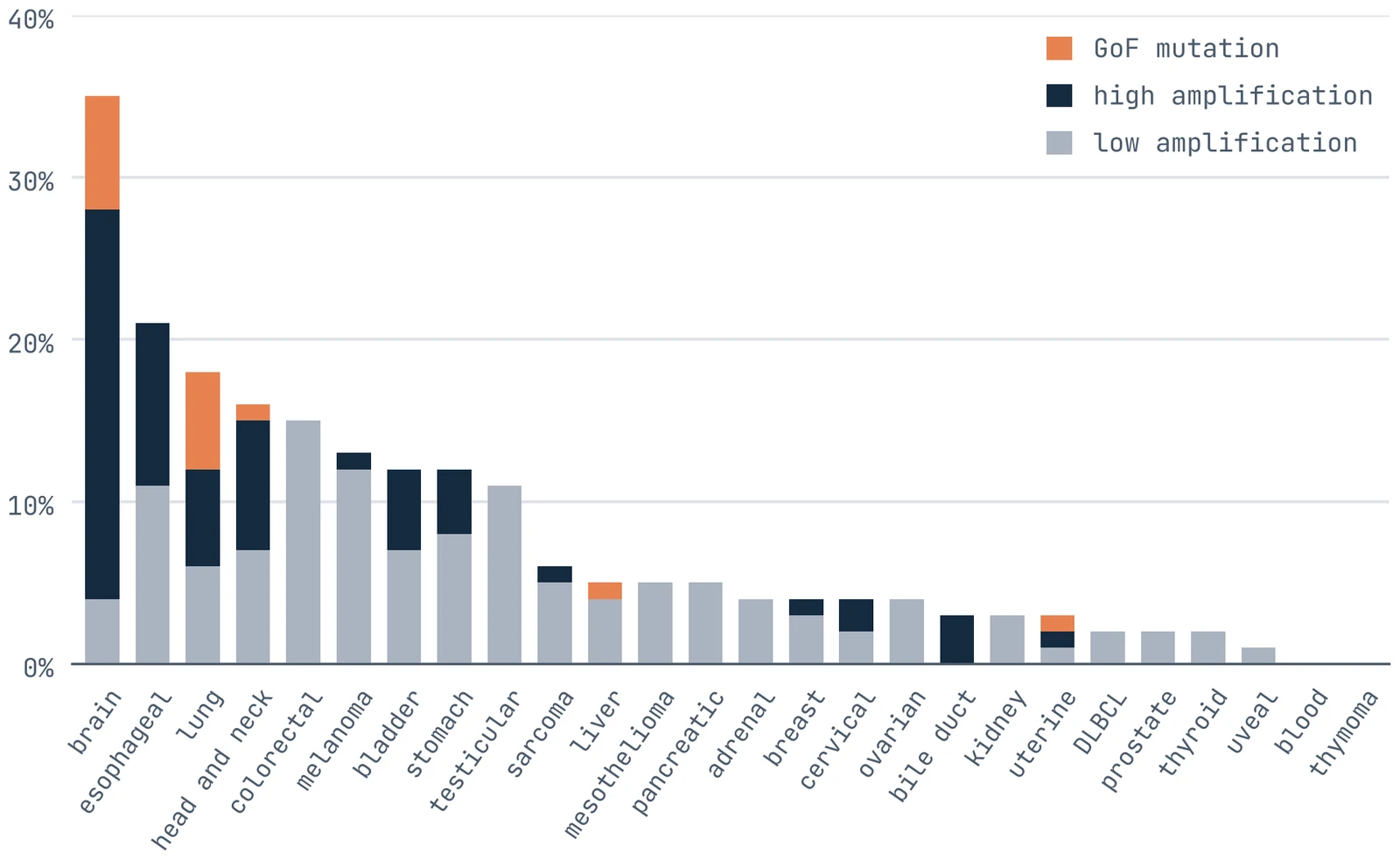
The comparison of mutated to amplified EGFR patients, revealed that amplified EGFR is not a solo-driver.
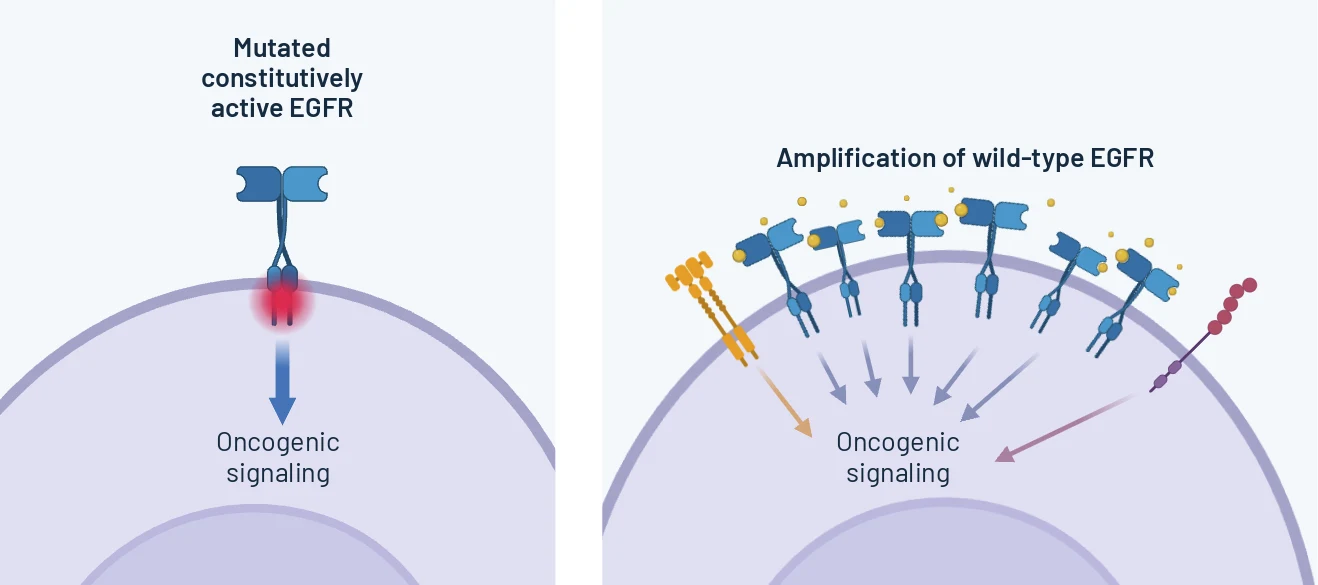
Patient data confirms the extreme addiction of tumors to EGFR. But mutation ≠ amplification, explaining the underperformance of monoclonal antibodies and suggesting that BiAb might have a massive impact in the space.
BiAb can exploit the mechanisms used by tumors to supercharge EGFR signaling. EGFR-MET is a validation of what was obvious, but patient data suggest that the EGFR-MET product will not win this space.
Therefore, no other supercharging is required.
In patient data, you can measure what other drivers are co-activated when EGFR gets amplified.
Select highly amplified (>7 additional EGFR copies) patients for your initial trials to maximize the therapeutic window. Then, from patient biopsy data, select the second target to win the space.
Medicines intended to work in patients should be developed with patient data in mind.