Investment lessons · KRAS, part 2

Context is king, but what does it actually mean?

About 1,700 genes are deregulated in every single KRAS tumor, yet most are irrelevant for tumor survival. Separating mutations into three tiers shows which ones matter; in pancreatic cancer, the SMAD4 axis offers the biggest differentiation for combinations with KRAS inhibitors. Drugs that could exploit SMAD4 loss are already in clinical development for other indications.

KRAS case study, part 2 · Pancreatic carcinoma · by Pawel Zawadzki, PhD

~1,700 genes
are deregulated in every single KRAS tumor
The case

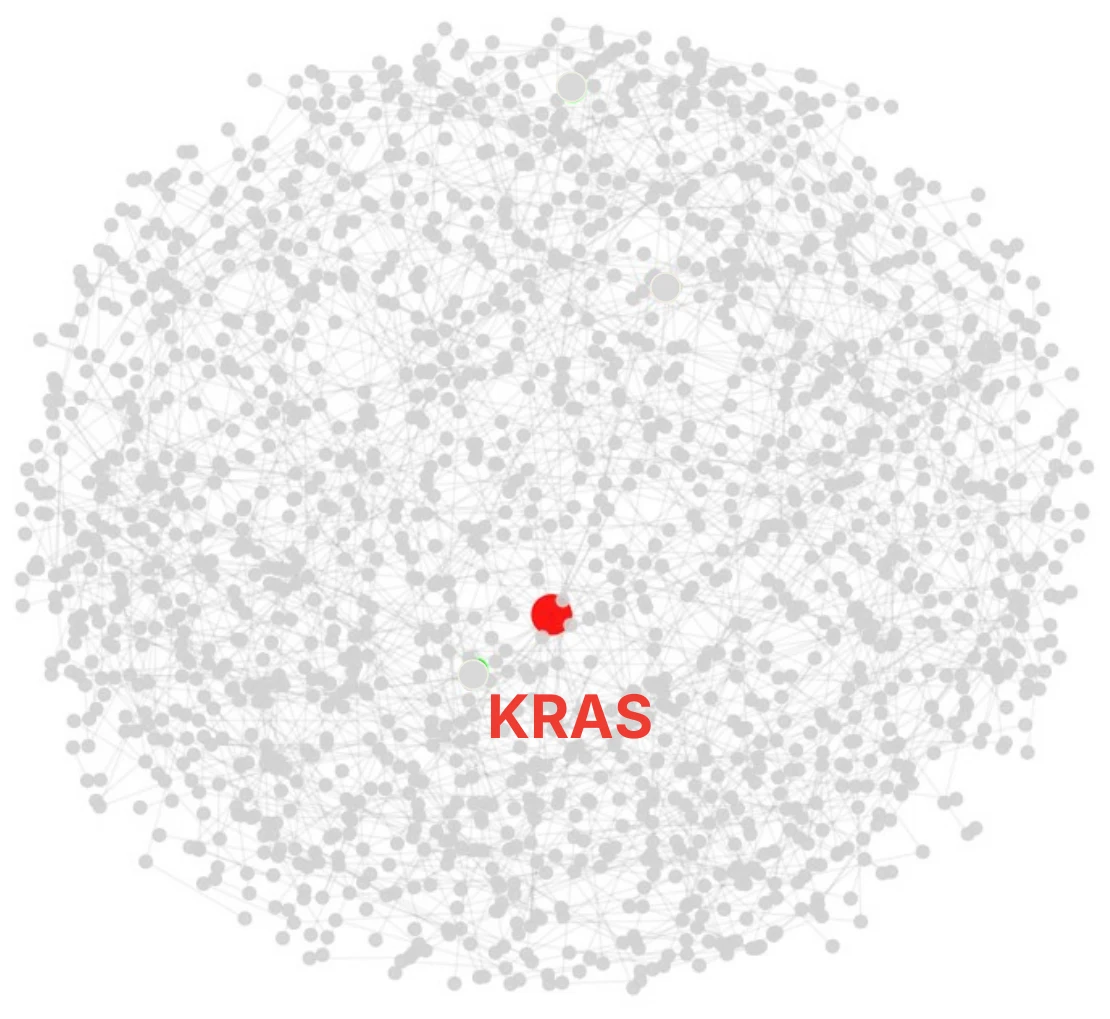
Overwhelming, but what if you could translate this complexity into clinical response rates?

The majority of genes are deregulated via DNA mutations, or at the level of transcription, expression, or protein modifications.

Here is shown the complexity of the molecular context in a single patient with a KRAS mutation! We all silently sweep under the rug what we cannot comprehend.

But not all gene mutations are created equal. In fact, the majority are irrelevant for tumor survival. RNAseq is noisy, but when superimposed with genetic mutations, it reveals which deregulated genes and pathways are critical for tumor survival.

Molecular context of a single KRAS-mutated pancreatic tumor
Molecular context of a single patient with a KRAS mutation.
Three tiers

Three tiers of mutations

  1. 1Mutations absolutely required by each KRAS tumor,
  2. 2Mutations conditionally important,
  3. 3Passenger mutations, irrelevant to the tumor.
  • Tier 1 - These translate into high clinical response rates.
  • Tier 2 - These deliver low response rates and small commercial opportunities as small sub-populations respond.

If a Tier 1 mutation affects an oncogene, the job is easy. But how to exploit the vulnerability created by the inactivated tumor suppressor?

Pancreatic KRAS-mutated tumor genes separated into three tiers
Figure 1. Separating mutations into Tiers is the key to translating cancer genomics into clinical outcomes. Pancreatic KRAS mutated tumor data is presented.
Two strategies

Translating Tier 1 mutations into clinical response rates

Two therapeutic strategies can be used to eliminate KRAS-driven pancreatic tumors:

Tumor suppressor · Tier 1

Reactivate

Directly: p53 reactivation (Rezatapopt) is showing some early success in the clinic. Not applicable to CDKN2A and SMAD4.

Indirectly: Block MDM2 (downregulates p53), inhibitors are struggling in the clinic. Histone Deacetylase (HDAC) Inhibitors can upregulate CDKN2A, SMAD4.
Tumor suppressor · Tier 1

Synthetic lethal approach

Synthetic Lethal targets from CRISPR screens. Yet, no clinically validated targets from CRISPR screens.

CDKN2A is typically deleted together with MTAP. PRMT5 as a target for MTAP loss is underperforming in the clinic.

Patient data

What the patient data revealed

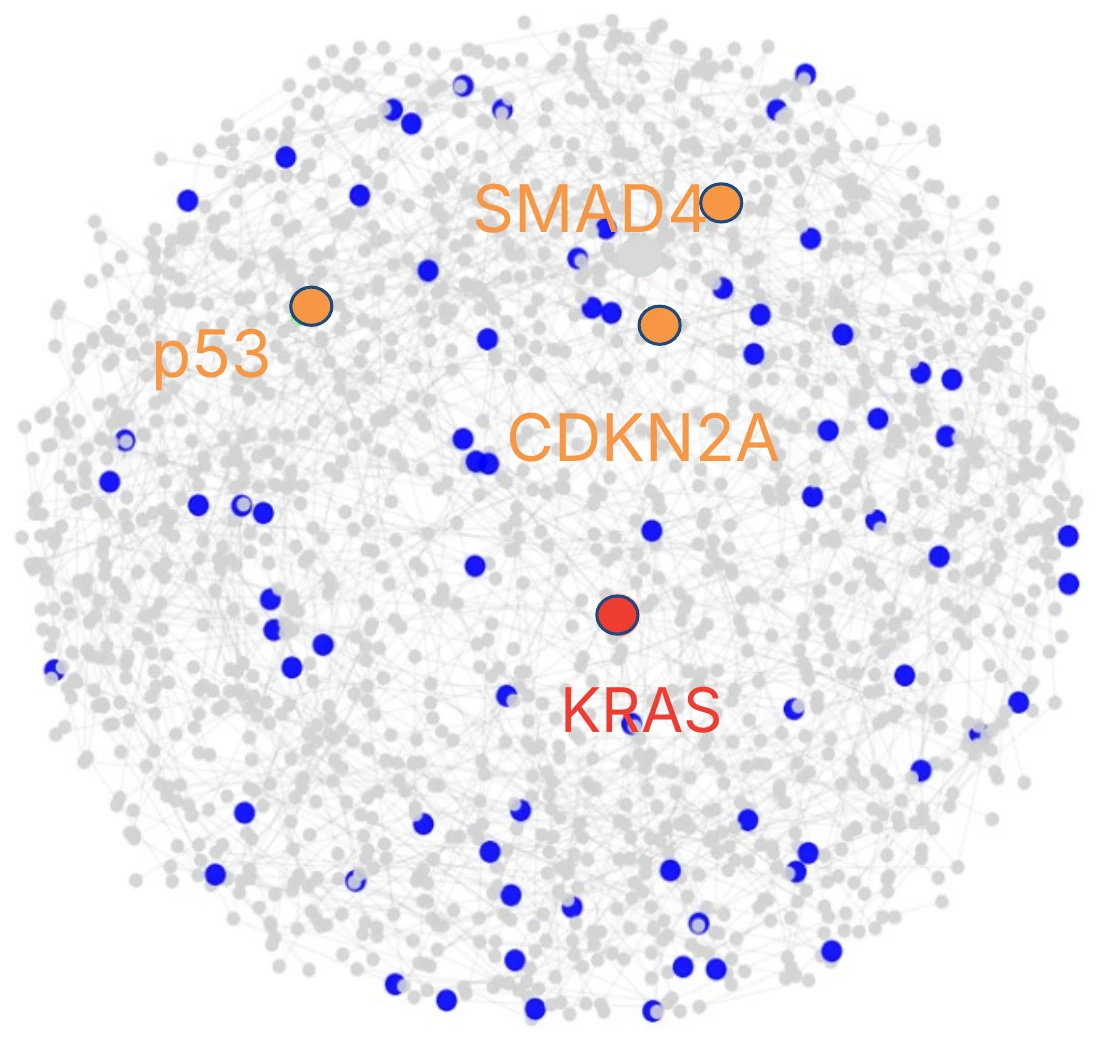
Multiple opportunities linked to SMAD4 were discovered.

  • Patient data uncovered two strategies for SMAD4 loss: a) block factors downregulating SMAD4, b) block a strong SMAD4 synthetic lethal target.

Drugs that could exploit SMAD4 loss in pancreatic KRAS tumors are already in clinical development for completely different indications!

On top of directly inhibiting KRAS, patient data reveal several opportunities for drug combinations

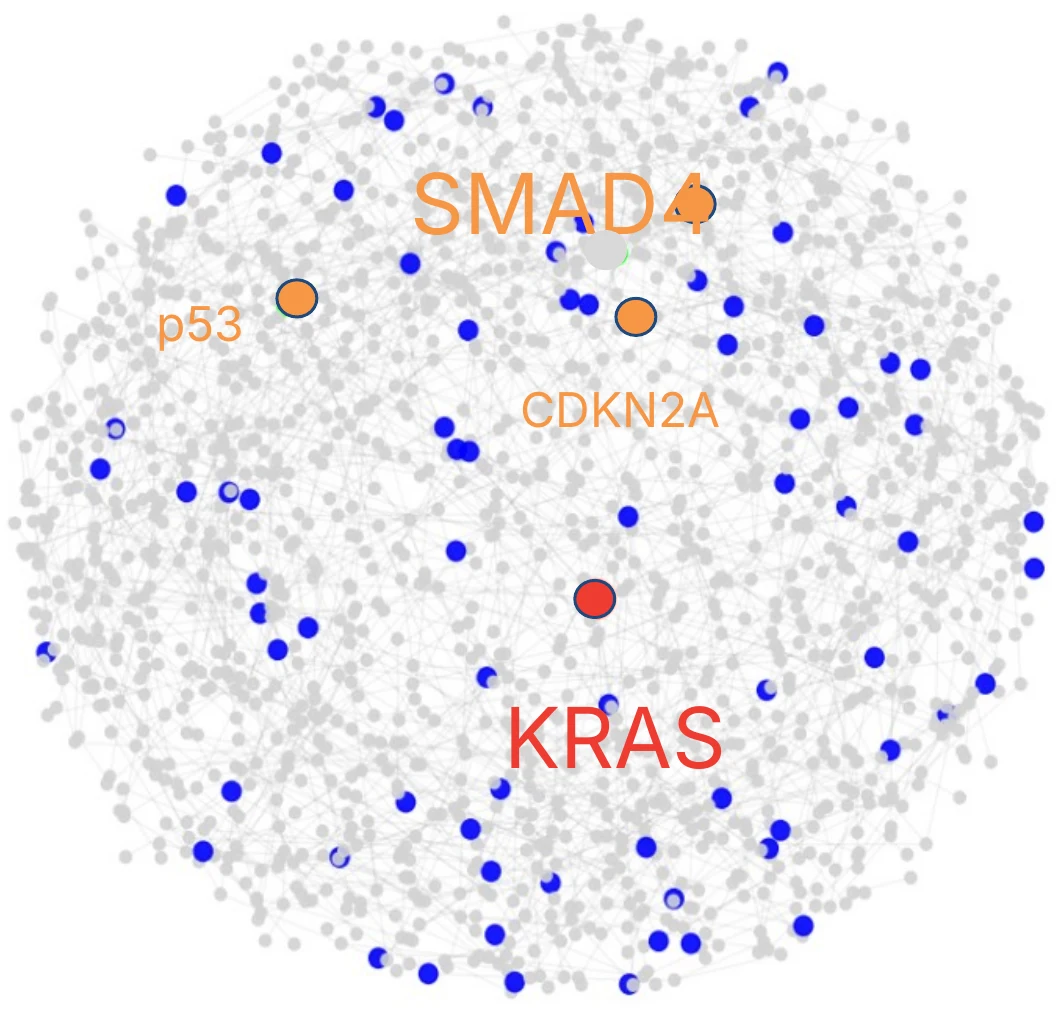
Network of genes around KRAS, SMAD4, CDKN2A and p53 in pancreatic tumors
Figure 2. SMAD4 axis offers the biggest differentiation for combination therapies with KRAS inhibitors.
The take-home message

KRAS combinations will reshape oncology as we know it

Take-home 01

Cancer biology is complex

Today, this complexity is the reason behind a disappointing 6% success rate of oncology clinical trials. But this complexity can be turned against cancer.

Take-home 02

Patient data opportunity

In pancreatic cancer, exploiting SMAD4 dependencies offers unexpected opportunities for drug combinations with KRASi. Some synergistic drugs are already in late clinical development.

Recommendations

Consult patient data for reliable outcomes

01

Do not bury your head in the sand

The complexity is scary, but it can be comprehended. Patient data + AI + smart team = better therapy

02

Different strategies are required for different tissues.

Each tissue is different. Map all tissues, then prioritize opportunities benefiting the biggest patient population.

03

Patient data should be used before your trial begins.

Cell line models are typically used to design drug combinations. Here, we show that the treatment-naive patient data can identify synergistic drug combinations that will improve clinical response rates and durability.

Medicines intended to work in patients should be developed with patient data in mind.